September 17, 2026

Delhi Metro Peak Hours 2026: Avoid Crowds With This Guide

Delhi Metro peak hours on weekdays are from 8:30 to 10:30 AM and 5:00 to 8:00 PM. Mondays are usually the most crowded. To avoid heavy rush, you can try travelling before 8:00 AM, between 12:00 PM and 4:30 PM, or after 8:30 PM.
Navigating Delhi city will no longer be stressful when you know which metro routes are least crowded and when. Riding the Delhi Metro is a fantastic way to travel around the city. However, during Delhi Metro peak hours, a simple trip turns into a stressful travel experience. Millions of people use the Delhi Metro every day to get to work or school. So, by knowing the best times when the routes are least crowded, you can save yourself from long lines and packed trains. Read on to know more about Delhi Metro routes, the best hours of the day to travel, and more.
Table of Contents
The Logic Behind Color-Coded Lines of Delhi Metro
Before we discuss the peak hours of Delhi Metro, let us know the logic behind the color-code metro lines. When the Delhi Metro first started in December 2008, it was just an 8-km route. Today, it has grown into a huge network of more than 390 km and more than 285 stations. It links India’s Capital city with nearby cities like Noida, Ghaziabad, Gurugram, and others.
The color-coding system makes it easier for passengers to identify the different routes.
- Red Line: This is the original and Delhi’s first metro line. It connects the crowded areas of East Delhi and Ghaziabad to North-West Delhi. Key stations on this line are Rithala, Inderlok, Netaji Subhash Place, and others. This line makes travel easy for thousands of daily office-goers and students living in areas like Rithala and Dilshad Garden.
- Yellow Line: It runs completely from North to South Delhi, and is the main lifeline for commuters traveling into the center of the city. It passes through the city’s center and links it directly to Gurgaon. Some of the major stations on this line are Samaypur Badli, Delhi University, Rajiv Chowk, AIIMS, Hauz Khas, and others. It connects major business hubs to residential areas.
- Blue Line: This is the longest and busiest route of the Delhi Metro network and runs from Dwarka Sector 21 to Noida Electronic City and Vaishali. This handles massive commuter traffic by connecting the western suburbs with business hubs in Noida and Ghaziabad. It also serves as a cross-city connector for daily workers and students.
- Green Line: This line connects Inderlok to City Park in Bahadurgarh. This line serves the western industrial and residential areas along the Rohtak road. It helps commuters to move smoothly from outer areas like Mundka into the main city network. Key stations on the green line are Inderlok, Ashok Park Main, Punjabi Bagh, Mundka, City Park, and others.
- Violet Line: This runs from Kashmere Gate to Raja Nahar Singh and is heavily used by office workers. It provides an easy and fast route to important historical and commercial areas. Important stations on this line are Kashmere Gate, Mandi House, ITO, Lajpat Nagar, and others. Thanks to this route, now anyone can travel from Delhi to Faridabad within just 45 minutes.
- Pink Line: This Delhi metro line forms nearly a complete ring around the city. It connects the outer areas of Delhi so passengers can travel between distant corners of the city without needing to go all the way through the city center. It runs from Majlis Park to Shiv Vihar, and includes important stations on this line are Majlis Park, Azadpur, Netaji Subhash Place, and others.
- Magenta Line: It runs from Janakpuri West to Botanical Garden in Noida. It is highly popular because it connects directly to Terminal 1 of IGI and helps travelers bypass heavy road traffic. Major stations on this route are IGI Airport Terminal 1, Kalkaji Mandir, Botanical Garden, and others.
- Grey Line: This is a short but very important Delhi Metro line. It runs from Dwarka to the Dhansa Bus Stand. This special route is built to connect the suburban area of Najafgarh and the rest of the main network of Dwarka, reducing travel times for local residents. Four stations on this 5.2 km line are Dwarka, Nangli, Najafgarh, and Dhansa Bus Stand.
- Orange Line: It is officially known as the Airport Express Line and provides a premium and high-speed connection from the New Delhi Railway Station straight to the airport. It is the fastest way for tourists and business travelers to reach their flights. Some key stations on this line are New Delhi, Shivaji Stadium, Dhaula Kuan, IGI Airport, and others.
Delhi Metro: Busiest vs. Least Crowded Lines
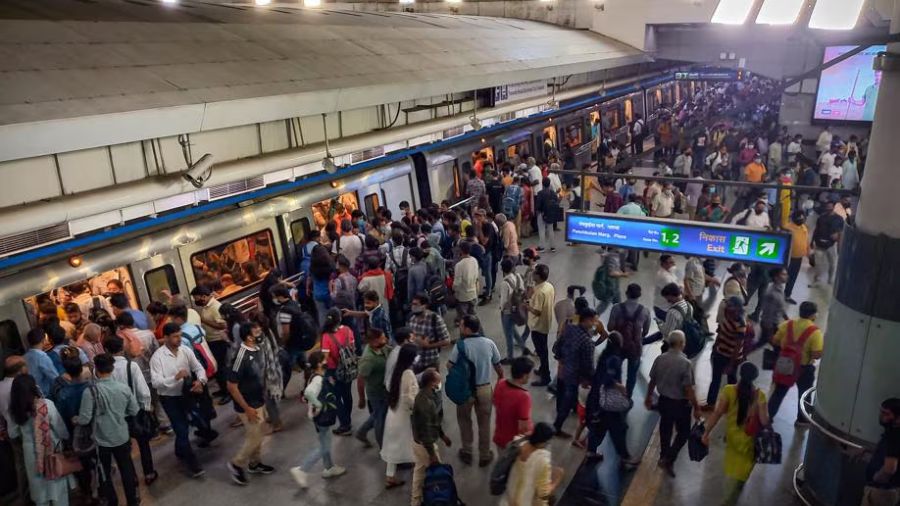
You can enjoy a comfortable Delhi Metro ride, where you can easily find a seat, but for that, timing is everything. By knowing the exact hours of the day when crowds drop, you can travel relaxing across the city. It is important to know that crowd patterns shift predictably throughout the day based on corporate and educational schedules.
| Delhi Metro Crowd Levels By Line | ||
| Metro Line | Crowd Level | Major Busy Stations |
| Yellow Line | Very High | Rajiv Chowk, Kashmere Gate, Hauz Khas |
| Blue Line | Very High | Rajiv Chowk, Yamuna Bank, Mandi House |
| Magenta Line | Moderate to High | Hauz Khas, Botanical Garden |
| Red Line | Moderate to High | Kashmere Gate, Welcome |
| Violet Line | Moderate | Central Secretariat, Mandi House |
| Pink Line | Low to Moderate | INA, Lajpat Nagar, Rajouri Garden |
| Green Line | Low | New Delhi, IGI Airport |
| Grey Line | Very Low | Dwarka, Dhansa Bus Stand |
| Airport Express | Very Low | New Delhi, IGI Airport |
- Most Crowded: The Blue Line (Dwarka to Noida or Vaishali) and the Yellow Line (Samaypur Badli to Millennium City Centre) are the most used lines and connect major corporate and residential corridors.
- Least Crowded: The Airport Express Line is generally the least crowded and most comfortable route in the Delhi Metro network. Shorter routes like Grey Line (Dhansa Bus Stand to Dwarka) usually experience lower passenger traffic compared to Blue and Yellow Lines.
Note: Large transfer hubs like Rajiv Chowk and Kashmere Gate are heavily crowded during peak hours in Delhi metro.
Peak Hours in Delhi Metro
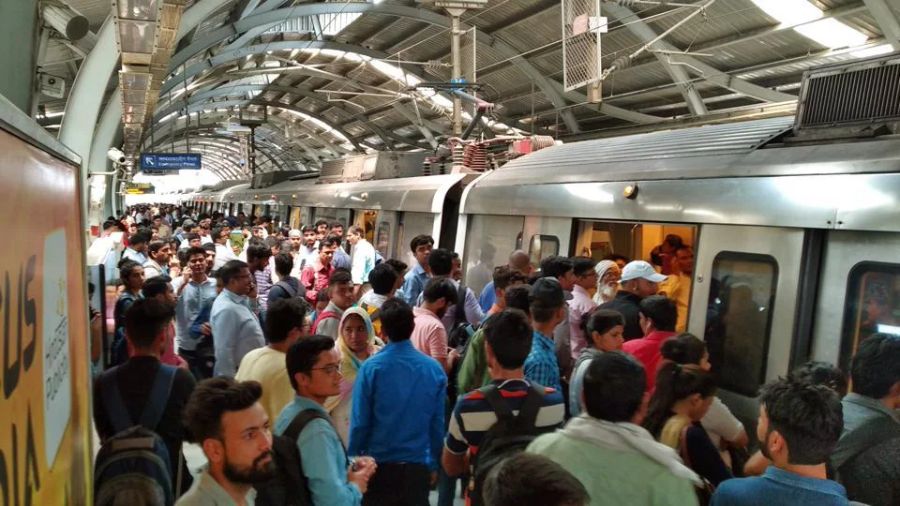
Delhi Metro has so many routes across the city, and some trains are actually much more comfortable than others. You can easily avoid the busiest times by knowing what the best hours of the day to travel are.
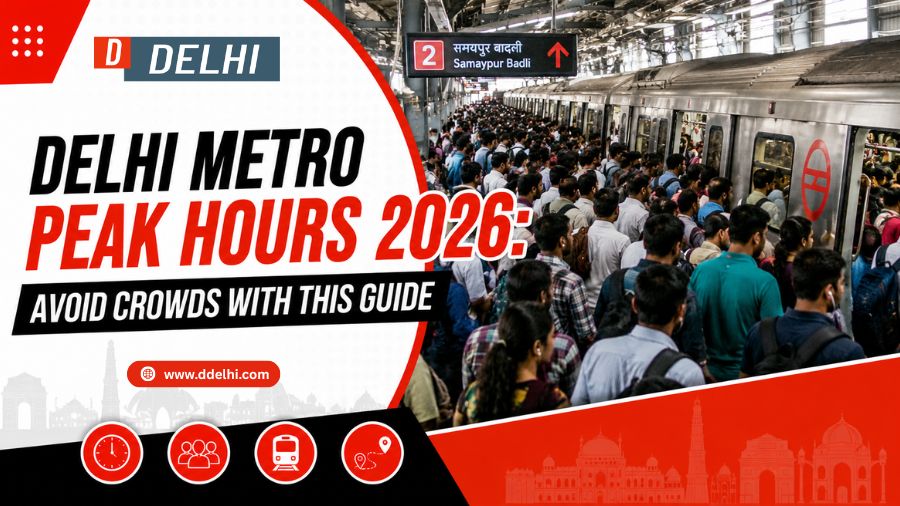
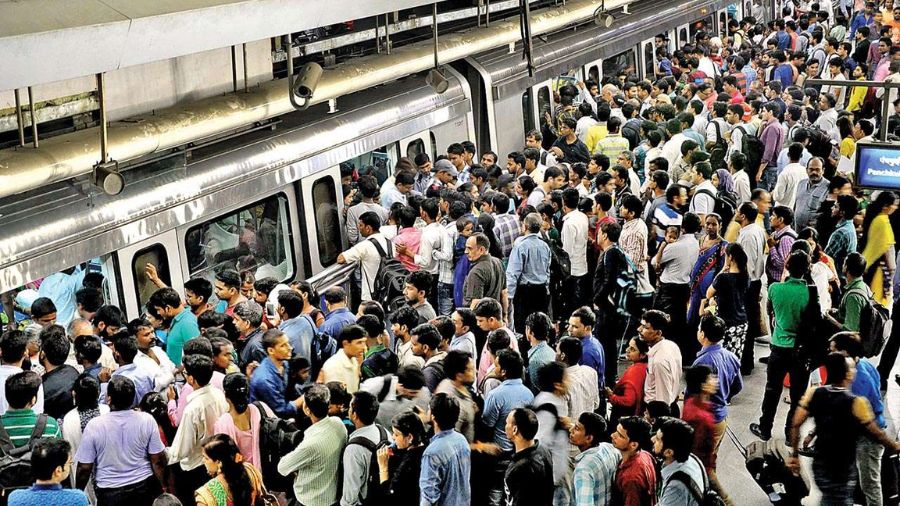
- Morning Peak (8:00 AM – 10:30 AM): This is one of the busiest Delhi Metro peak hours due to heavy passenger movement toward major business hubs like Connaught Place (Rajiv Chowk), Millennium City Centre Gurugram, and Noida.
- Mid-Day Off-Peak (12:00 PM – 4:30 PM): One of the most comfortable times to travel. The trains remain frequent, and finding seats is usually much easier than during Delhi Metro peak hours.
- Evening Peak (5:30 PM – 8:00 PM): This is another high-traffic period, as office workers travel back to residential areas in Delhi, Dwarka, Ghaziabad, Noida, and Faridabad.
- Night Off-Peak (8:30 PM – 11:30 PM): By this time, the passenger numbers gradually decrease, making travel more comfortable and less crowded before metro services end for the day.
Smart Tips to Avoid the Rush
Crowd levels vary based on the time of day, but the Yellow and Blue Lines are usually the busiest corridors in the Delhi Metro network. The least crowded routes are the Airport Express and the Grey Line. You can easily avoid the rush by checking TRAINS FREQUENCY and traveling between mid-morning hours (outside of local university or office shifts).
The crowd increases heavily during public holidays, festivals, and large events, so if possible, avoid the metro on these days. The very first coach of every train in the moving direction is reserved for women. Solo female travelers should head to the pink-marked platform zones for a more comfortable ride.
Also Read: Highest Paying Companies in India 2026: Salaries, Packages & Perks