September 17, 2026


How to File ITR Online in India 2026: A Salaried Employee Guide

Salaried employees must know how to file ITR online in India. The ITR filing process is simple, and you can complete this through a government portal in around 30 minutes. You just need your PAN, Aadhar, Form 16, and log in to the Income Tax e-filing portal to file your tax return online.
The income tax return filing process is quick and completely paperless in 2026. Indian residents with an annual income up to INR 50 lakh are usually required to file their returns using ITR-1. Whether you need to report your income from your job or business to the tax authority, this blog will provide very important information. Read on to know more about how to log onto the portal, documents required, complete e-verification on your own, and more.
Table of Contents
Key Benefits When You File ITR Online in India
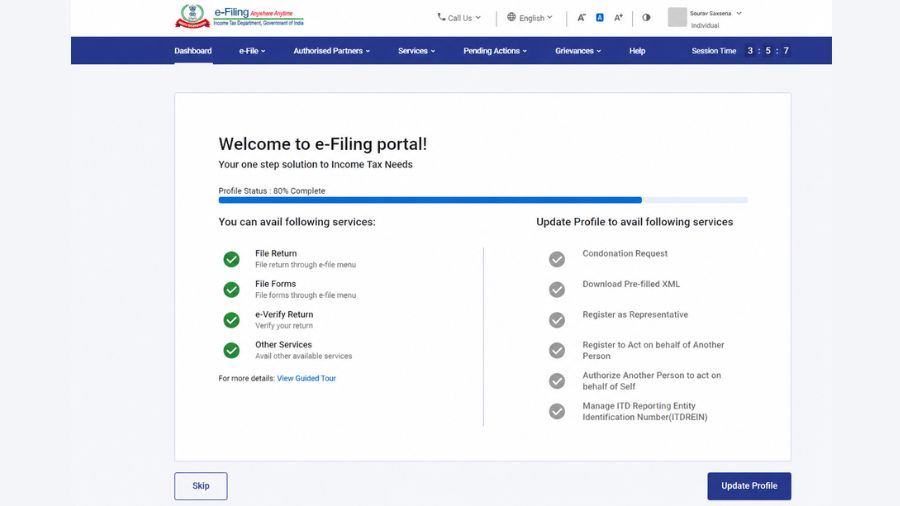
Before you understand how to file income tax return online, you should understand what benefits this decision can offer.
Here are the key advantages that salaried employees can secure by filing ITR online:
- Seamless Convenience & Accuracy: When you file ITR online in India, you don’t need to visit physical tax offices or handle complex paperwork. ITD portal offers pre-filled forms and built-in error checking. These features make sure you can easily complete the process without making mistakes.
- Faster Tax Processing & Refunds: Filing your taxes online is not only easier but also faster than filing on paper. In case you have excess TDS to claim, the online system makes sure those funds go straight into your bank account with minimal delays.
- Easier Loan and Visa Approvals: Banks and embassies often require your tax records to see your financial history. By filing ITR online, you can easily keep a clear record of paying taxes. This helps you prove you are trustworthy when you apply for credit cards, home loans, or international visas.
- Avoidance of Penalties: By completing your returns on time, you avoid heavy late-filing fines and interest charges. Moreover, online filing provides easier access to all your tax return records that help you during international travel and banking tasks.
Who Needs to File ITR as a Salaried Employee?

You generally have to file ITR as a salaried employee in India if your annual income goes above the basic tax-free limit. You must work under a form of contract where your employer controls what you do and pays you. You can also have minor earnings like bank interest or a single house property rental, but your main income must come from your job as a fixed salary. Salaried employees earning up to INR 50 lakh mostly file using the simple ITR-1 (Sahaj) form.
You are required to file an ITR if any of the following apply:
- Multiple Income Sources: You must file a return if your income comes from multiple sources, such as making money from the stock market, property rental income, or earning interest on bank investments.
- Foreign Assets or Income: If you hold foreign interests outside India, completing the income tax return filing process is mandatory for you. You need to report any foreign bank accounts, residential properties outside India, or overseas company shares.
- High Electricity Bills: You have to file your income tax return if your home or business’s total electricity bill payments crossed one lakh rupees during a single financial year.
- Large Current Account Deposits: You are required to file your income tax return if you deposited more than one crore rupees into one or more current bank accounts.
- Expensive International Travel: International leisure or business trips also result in mandatory reporting if they are expensive. You must file ITR online in India if you have spent more than 2 lakhs on a foreign travel.
4 Types of ITR Forms for Salaried Employees
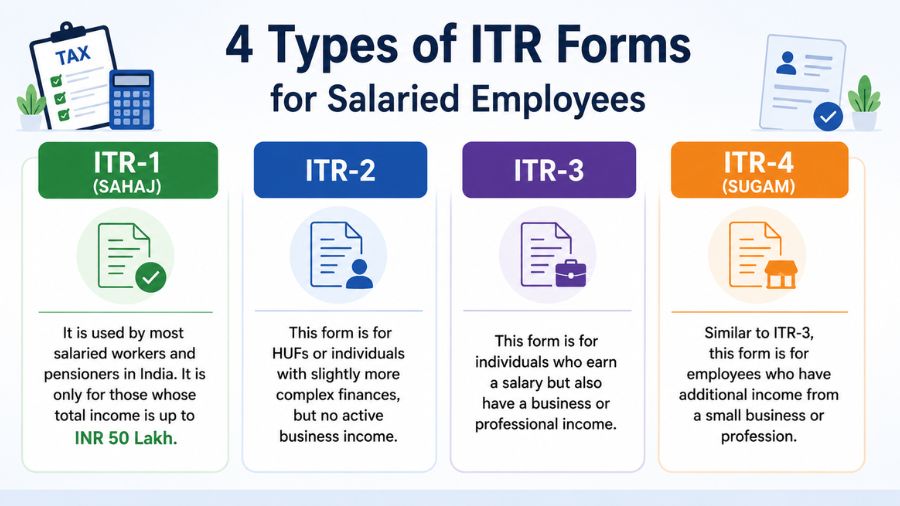
Selecting the correct ITR form is a must for a smooth tax filing process. Most salaried employees use either ITR-1 or ITR-2. If you have a business or freelance income, you may need a different tax form. You can visit the Income Tax Department portal or connect with tax experts to choose the right form.
- ITR-1 (Sahaj): It is used by most salaried workers and pensioners in India. It is only for those whose total income is up to INR 50 Lakh. You need to choose this form for the IT return filing procedure if your earnings come from salary, pension, one house property, and other minor sources like bank interest.
- ITR-2: This form is for HUFs or individuals with slightly more complex finances, but no active business income. You must choose this if you earn more than ₹50 Lakh, own multiple houses, or have profits from selling assets like stocks and real estate.
- ITR-3: This form is for individuals who earn a salary but also have a business or professional income. If you have a stable job but also run a freelance business, trade actively in the stock market, or offer consultation services, you need to file this form.
- ITR-4 (Sugam): Similar to ITR-3, this form is for employees who have additional income from a small business or profession. But it is mainly used if you opt for a simplified tax calculation method, presumptive taxation. This means you report a fixed percentage of your business turnover as profit without the need for detailed bookkeeping.
ITR 1 vs ITR 2 in India: Key Differences
Before understanding the income tax return filing process, your main focus must be on how to choose the right form. ITR 1 is mostly used by salaried residents in India, while ITR 2 is for individuals or HUFs with higher or more complex earnings.
| Tax Feature / Income Source | ITR 1 (Sahaj) | ITR 2 |
| Who Can File | Resident individuals only | Individuals and HUFs |
| Total Income Limit | Up to ₹50 lakhs | No specific cap (above ₹50 lakhs) |
| House Property | Only 1 house | Multiple house properties allowed |
| Capital Gains | Not allowed | Allowed (e.g., selling shares, mutual funds, real estate) |
| Foreign Income / Assets | Not allowed | Allowed |
| Agricultural Income | Allowed up to ₹5,000 only | Allowed even if it exceeds ₹5,000 |
What Documents Do You Need to File Your Income Tax Return
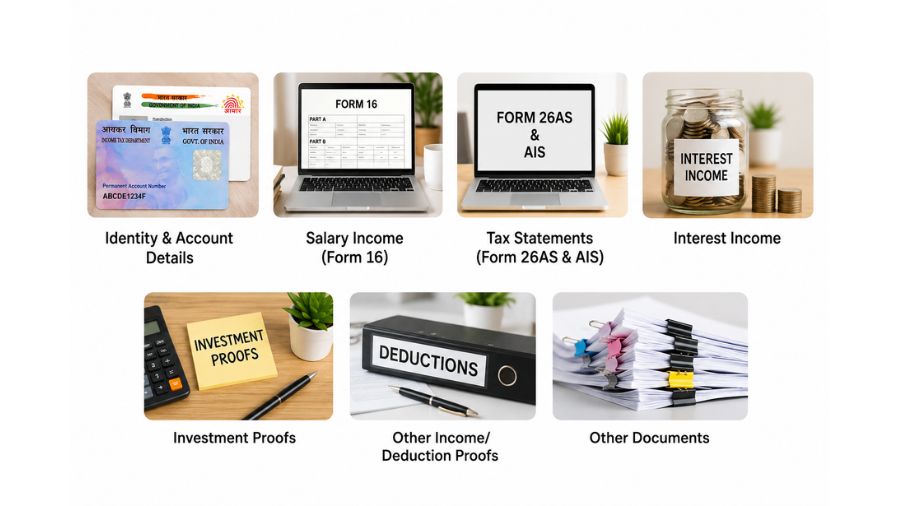
You need to prepare some documents before starting the IT return filing procedure. You must keep some documents handy to make sure you fill out the form accurately. To e-file your ITR smoothly, you mainly need the following documents:
- Identity & Account Details: Your PAN Card and Aadhaar Card. You will also need your bank account numbers and IFSC code to receive any refunds.
- Salary Income (Form 16): This is issued by your employer and provides details of your salary, allowances, and the exact TDS.
- Tax Statements (Form 26AS & AIS): You can download these from the Income Tax e-Filing Portal. These verify all the taxes deducted from your income.
- Interest Income: Certificates from your banks or post office showing how much interest you earned on your savings accounts and fixed deposits.
- Investment Proofs: Receipts for investments, like EPF, life insurance, or others, to reduce your taxable income, if you are opting for the old tax scheme.
- Other Income/Deduction Proofs: If you have income from renting a house, selling property, or stock market trading, gather your rent agreements, broker statements, and home loan interest certificates.
- Other Documents: You might need monthly salary slips or bank statements if you don’t have Form 16.
Note: It is advised to work with trusted tax experts or get consultation from them for the necessary documents you must prepare before you file your income tax return. Many organizations provide a Form 16 download in India through employee self-service portals.
Key Income Tax Deductions for Salaried Employees
Most of these deductions are available under the Old Tax Regime. If you opt for the New Tax Regime, many deduction benefits may not be available.
| Section / Act | Eligible Investment / Expense | Maximum Deduction Limit | Best Suited For |
| Section 80C | ELSS, PPF, EPF, Life Insurance Premium, Principal on Home Loan, Tuition Fees | Up to ₹1.5 Lakh | All Salaried/Self-Employed individuals |
| Section 80D | Health Insurance Premium (Self, Family & Parents) | Up to ₹25,000 to ₹1 Lakh | Medical expense coverage |
| Section 80CCD(1B) | Additional contribution to NPS (National Pension System) | Up to ₹50,000 | Retirement planning |
| Section 24(b) | Interest paid on Home Loan (for a self-occupied property) | Up to ₹2 Lakh | Homeowners paying EMIs |
| Section 80E | Interest paid on Higher Education Loan for self/family | No limit (actual interest paid) | Individuals with education loans |
| Section 80G | Donations to charitable funds and organizations | 50% or 100% of the donation amount | Philanthropy & tax saving |
How to Register on the e-Filing Portal?
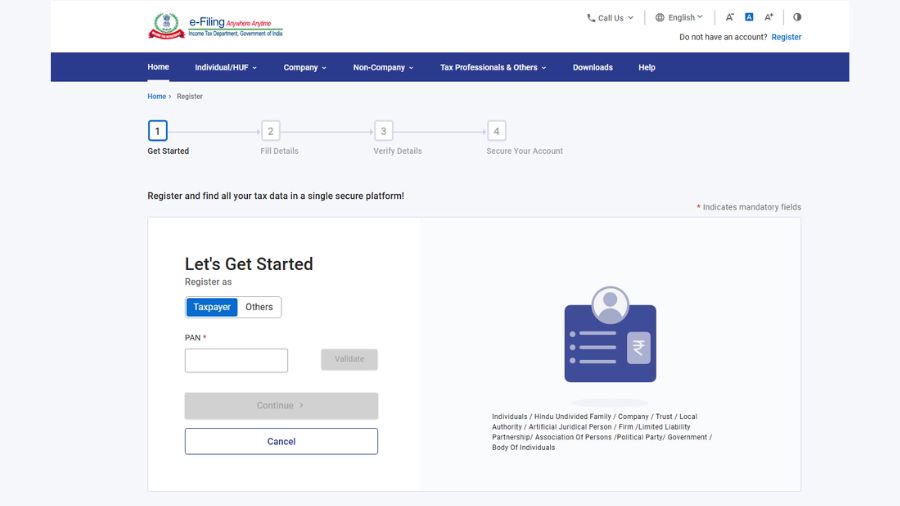
If you know how to file taxes but haven’t registered on the e-filing portal, you need to complete that first. You must create your digital identity on the official government platform.
This process is completely paperless, and here is how you can register on the Income Tax e-Filing portal:
- Access the Portal and Submit your PAN: Firstly, you need to go to the official Income Tax e-Filing Portal homepage. Then click on the Register option, choose Taxpayer as your category, enter your PAN, and select Validate to proceed.
- Link Aadhaar Information: If your PAN is already linked with your Aadhaar, a pop-up message will appear on the screen. You only need to select the checkbox to confirm and validate your details directly with the UIDAI database.
- Provide Basic Personal Information: Next, you have to fill out the Basic Details page with your legal name, DOB, gender, and residential status. Make sure the details you enter match your PAN records perfectly.
- Input Contact Information: After PAN verification is completed, a new section will appear. Then you have to type your primary mobile number, a valid email address, and a permanent address.
- Verify with Two OTPs: You will receive OTPs on your phone number and email ID. You need to enter the codes in the required fields to continue.
- Review Your Personal Data: You must carefully check all the information displayed on your screen. If you find any mistakes or you need to update something, edit those and then click on Confirm.
- Create Your Secure Password: Lastly, you need to enter a strong password on the Set Password page. You make sure the password is secure and easy to remember. You will be asked to re-enter the password to confirm, and this will complete your registration. Whenever you visit the portal for paying or file ITR online, you need to enter your Income Tax Portal India login details.
How to File Income Tax Return Online in India in 2026
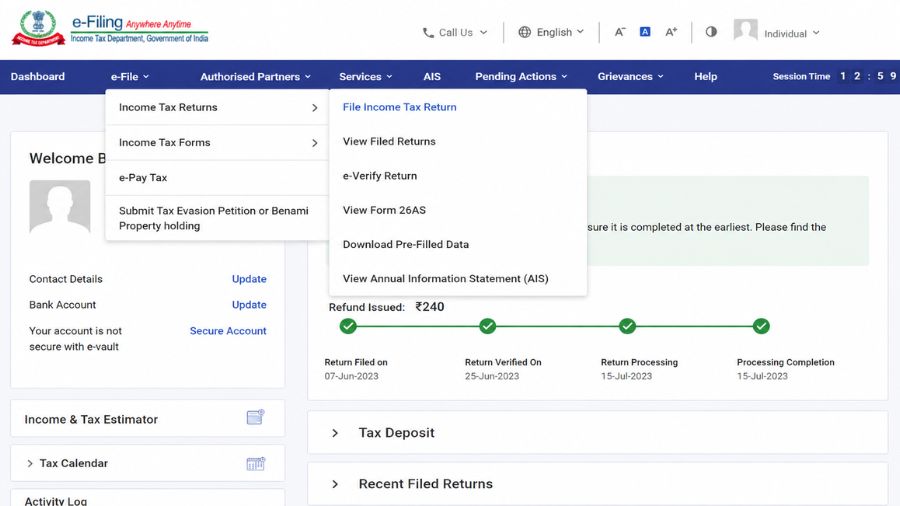
The online IT return filing procedure in India in 2026 is very simple. You just need to log in to the official portal and follow some simple steps to complete this process from anywhere.
1. Gather Your Tax Documents
Before opening your account using your income tax portal India login details, you need to collect some required documents. This makes sure you don’t face any difficulty while filing the form. Generally, you require PAN, Aadhaar, Form 16, AIS, TIS, and bank statements.
2. Log In
Next, you need to visit the platform and log in using your PAN to start your return file. Then click on e-File, then choose Income Tax Returns, and then select the File Income Tax Return option. However, if you have not created a file, you need to first create an account by entering your PAN and validating your details.
3. Select Year and Filing Mode
Then you need to select the period for which you are reporting income. For example, you need to select Assessment Year AY 2026-27 for income between April 2025 and March 2026. Next, you need to select the mode of filing as Online and click continue. After that, you have to choose your status, like individual, HUF, and others.
4. Choose the Right Form
Next, you need to choose the correct form to make sure your return application is not rejected by the tax department. Select ITR-1 if your salary is under INR 50 lakhs, while you must choose ITR 2 if you have income other than business or profession, like capital gains, stock market gains, and multiple house properties. Next, you need to click on get started and provide your reason for filing.
5. Verify Data and Choose Your Regime
The online income tax return filing process is easier because the portal automatically fills most of your information. But make sure you check every detail before submission. You must check that your salary income, TDS data, and other details are correct. You should choose the tax regime that suits you best.
6. Validate and Submit
Then click Proceed to Validation to automatically scan for errors. You can clear any outstanding balance using the online e-Pay Tax feature. You need to preview your filled details for accuracy and click submit.
7. E-Verify Your Return
You must connect with a trusted tax expert who can help you with income tax return filing online step by step. Your return is legally invalid until you complete this identity verification process, and you must verify it within 30 days after submission. You need to e-verify your return to complete the IT return filing procedure. You can e-verify instantly using an Aadhaar OTP, net banking, or a bank ATM.
Conclusion
When you file ITR online in India in 2026, you need to keep your password safe to ensure your tax records are always secure. It is very important to know that submitting ITR doesn’t end the filing process. You need to e-verify it within 30 days of submission, and the easiest way to do so is by generating an Aadhar OTP on the portal. If you are still confused, you can connect with trusted tax experts to stay compliant and stress-free.
Also Read: Delhi Metro Peak Hours 2026: Avoid Crowds With This Guide